
A Story of Two Volcanoes
Photos from BLM
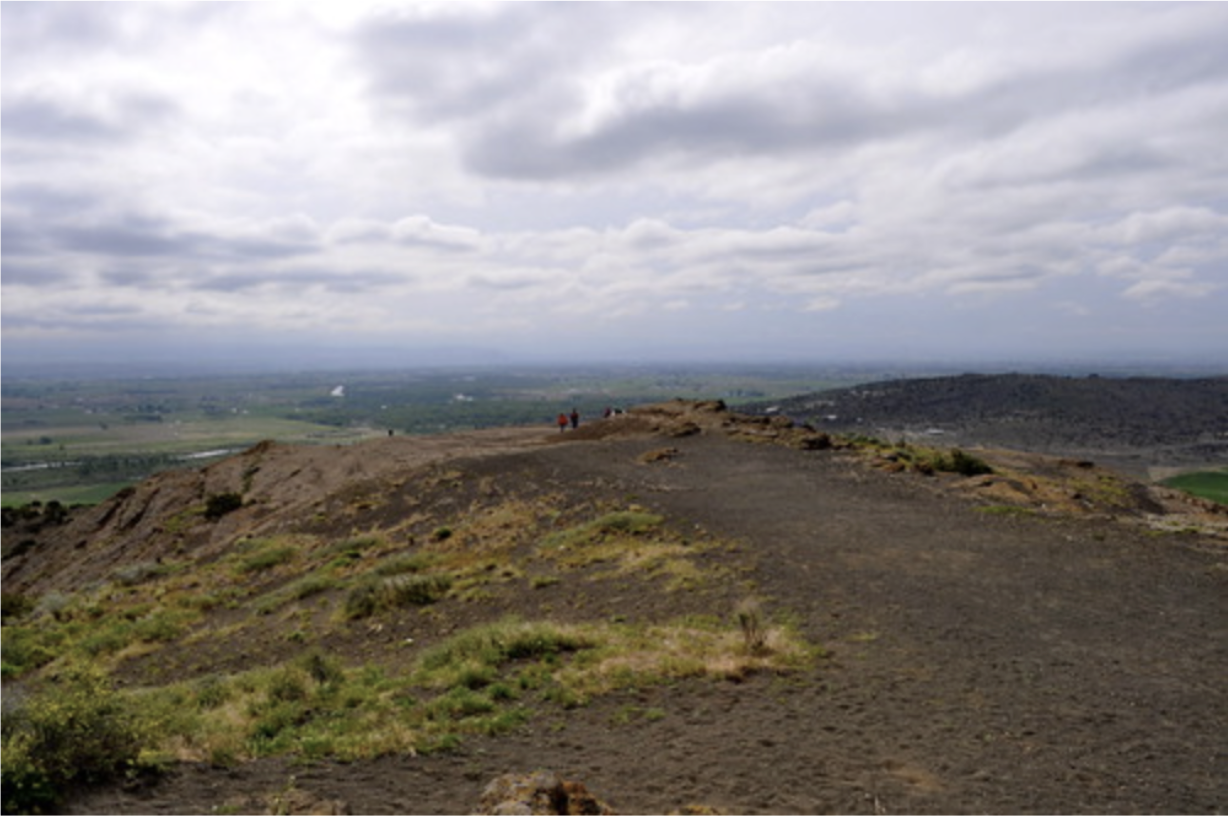
Did you know that North and South Menan Buttes in southeastern Idaho are two of the world’s largest volcanic tuff cones?
>
The Volcanic Story Behind the Menan Buttes
The two cones, with four smaller associated cones, align along a north-northwest line and comprise the Menan Complex—and what most in the Yellowstone Teton Territory refer to as the Menan Buttes.
The buttes rise about 800 feet above the surrounding Snake River plain and were formed during the late Pleistocene in age, dating to approximately 10,000 YBP (Years Before Present).
The volcanoes forming the two major Menan Buttes were created when basaltic magma came into contact with a shallow aquifer or with the precursor of the modern Snake River—an unusul occurrence when molten magma met cold river water, and cooled so quickly that crsytals couldn’t form, and so the lava solidified into glass, called tachylyte.
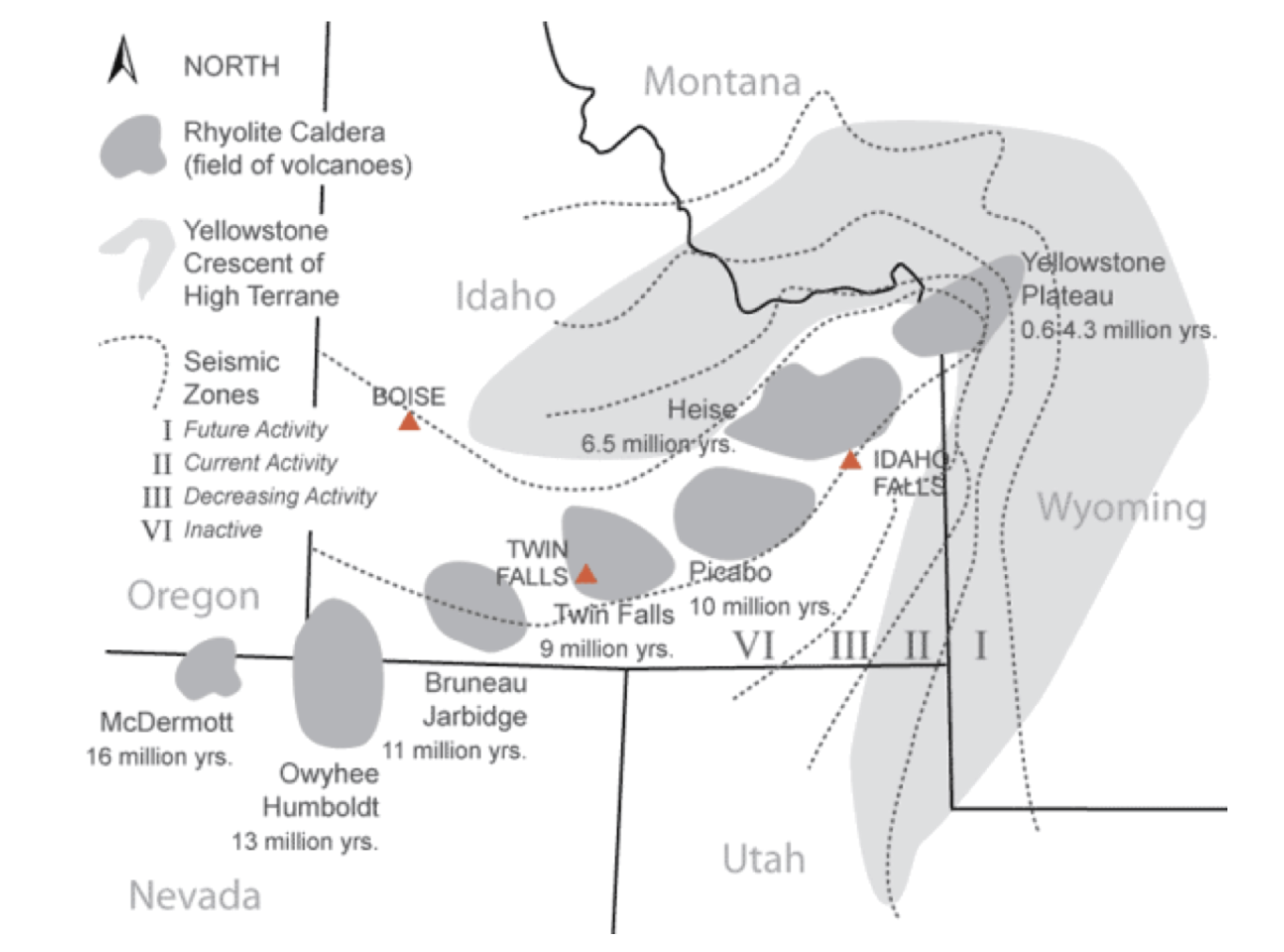
In addition to their geological significance, the rhyolite domes of the ESRP are also culturally significant. Artifacts and archeological evidence suggest that humans have inhabited the ESRP since the end of the last ice age, ~13,000 years ago.
Big Southern Butte was an important source of obsidian and artifacts sourced from there have been found throughout central and southern Idaho. More recently, travelers along the Goodale’s Cutoff spur of the Oregon trail in the mid-late 1800s and subsequent stagecoach and train lines utilized the freshwater springs along the base of Big Southern Butte.
>
Explore the Menan Buttes Trail
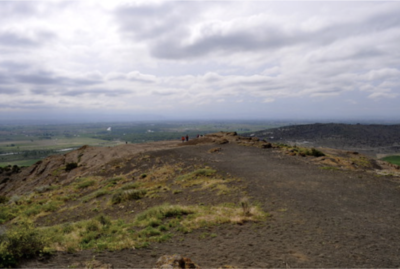
Explore history in real time on the North Butte’s 3.1 mile trail. About a quarter of the way around, weather permitting views of the St. Anthony Sand Dunes, largest set of sand dunes in Idaho can be seen. There are no day-use fees associated with this site. North Menan Butte is open to non-motorized recreation activities only.
The South Menan Butte is currently in a private holding, however, North Menan Butte is publicly owned and has been designated as a National Natural Landmark and a Research Natural Area by the United States Congress. The US Bureau of Land Management designated the North Butte as an Area of Critical Environmental Concern (ACEC).
Learn More In
Our Eastern Idaho Blogs
As the Veil Thins, Halloween Summons Late Nights
Boo at the Zoo, Straw Mazes and Haunted Houses, YTT is Spooky Family Fun
Art shares ground in Yellowstone Teton Territory
Fall into the Backcountry
25 HOURS IN IDAHO FALLS
A Story of Two Volcanoes

Downtown is never down and out

Ashton’s Artists Find a Retreat
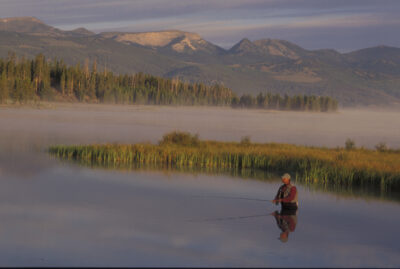
Reel in the fun at Fly Fishing’s World Championships
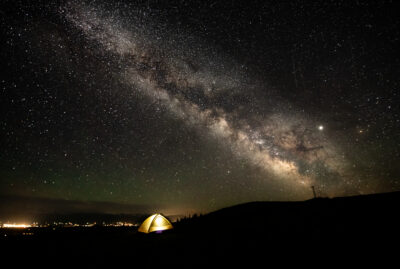
One Destination for All Recreation

Dog Days of Summer Call for Rockhounds